Compound Information
Technical specifications
Lyophilized powder; keep sealed, dry, and protected from light
Light-sensitive; the copper complex should be shielded from direct light
Aliquot after reconstitution; avoid repeated freeze–thaw cycles
Lyophilized Powder
-20°C preferred; 2–8°C for short-term handling
Reconstituted
2–8°C
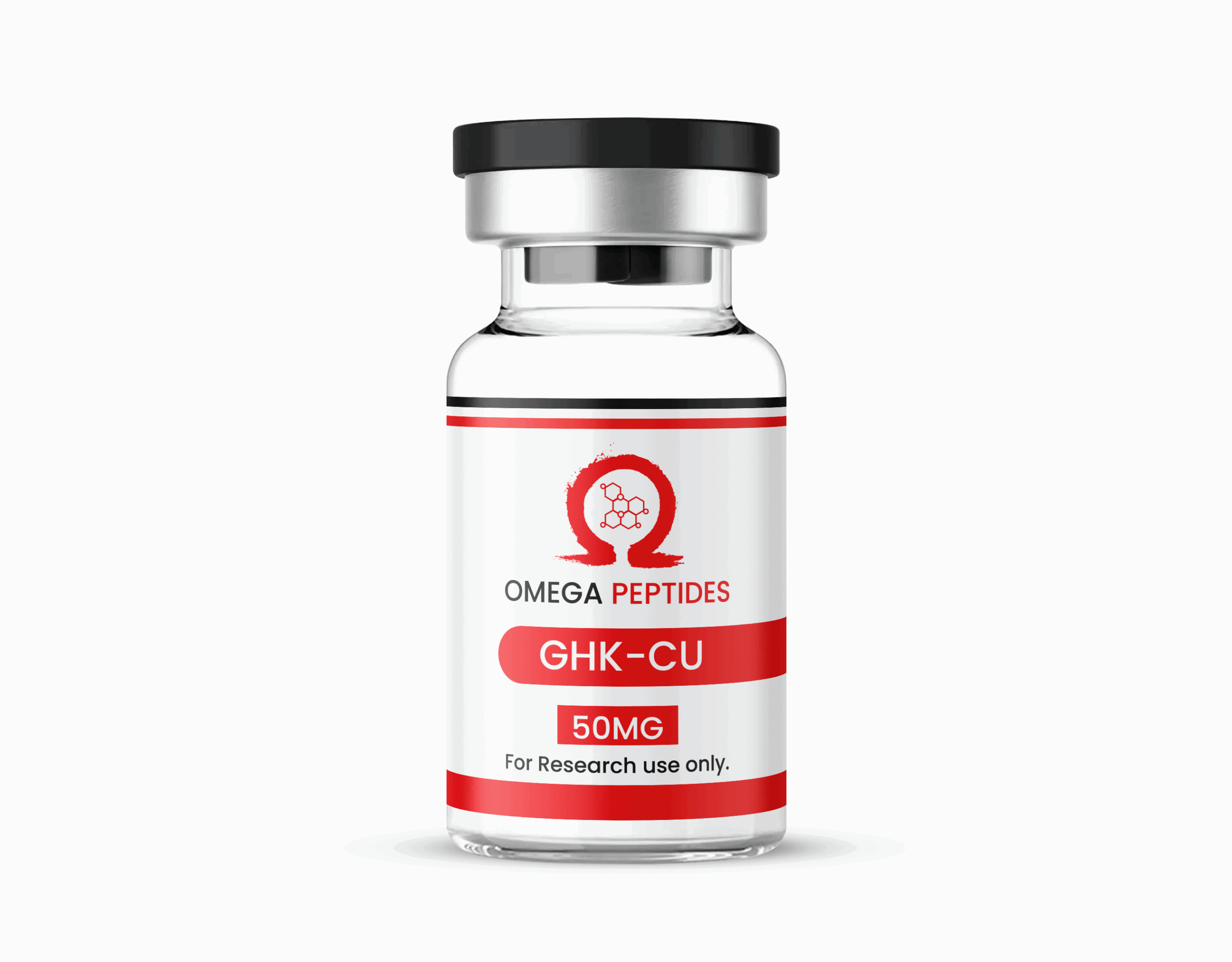
GHK-Cu is a naturally occurring tripeptide — glycyl-L-histidyl-L-lysine — first isolated from human plasma in the 1970s, where it was observed that plasma concentrations decline substantially with age. Its defining feature is an exceptionally high affinity for copper(II): the histidine imidazole and the terminal amine coordinate the metal ion in a stable square-planar complex, and it is this copper-bound form, not the bare peptide, that carries the biological signal. That distinction matters in study design, since the free tripeptide and the copper complex behave differently in assay. GHK-Cu has been investigated extensively for its role in extracellular matrix biology — collagen and glycosaminoglycan synthesis, metalloproteinase and TIMP balance, and copper-dependent enzyme activity such as lysyl oxidase. Broader gene-expression profiling work has reported that it modulates a large set of human genes associated with tissue remodeling and antioxidant response, which is why it appears both as a standalone research compound and as a component in blend preparations. Supplied as a high-purity lyophilized powder for reproducible in-vitro and approved in-vivo work. This product is for laboratory research and development purposes only and must be handled by qualified professionals. Not for human, therapeutic, or diagnostic use.
Copper Chelation
Coordinates Cu(II) in a stable square-planar complex — and it is the copper-bound form, not the free peptide, that carries the signal.
Matrix Remodeling
Studied for collagen and glycosaminoglycan synthesis, and for its influence on the MMP–TIMP balance in extracellular matrix turnover.
Endogenous Origin
Isolated from human plasma rather than synthesized de novo — a native signaling molecule whose levels decline with age.
Gene Expression Studies
Expression-profiling work has reported modulation across a broad set of genes tied to tissue remodeling and antioxidant response.
Copper-Dependent Enzymes
A relevant reference compound in work on lysyl oxidase and other cuproenzymes involved in collagen cross-linking.
≥99% HPLC Purity
Every batch is HPLC-verified and supplied lyophilized, ensuring reproducible results across long study timelines.