Compound Information
Technical specifications
Lyophilized powder; keep sealed, dry, and protected from light
The GHK-Cu component is light-sensitive; shield the vial from direct light
Aliquot after reconstitution; avoid repeated freeze–thaw cycles
Lyophilized Powder
-20°C preferred; 2–8°C for short-term handling
Reconstituted
2–8°C
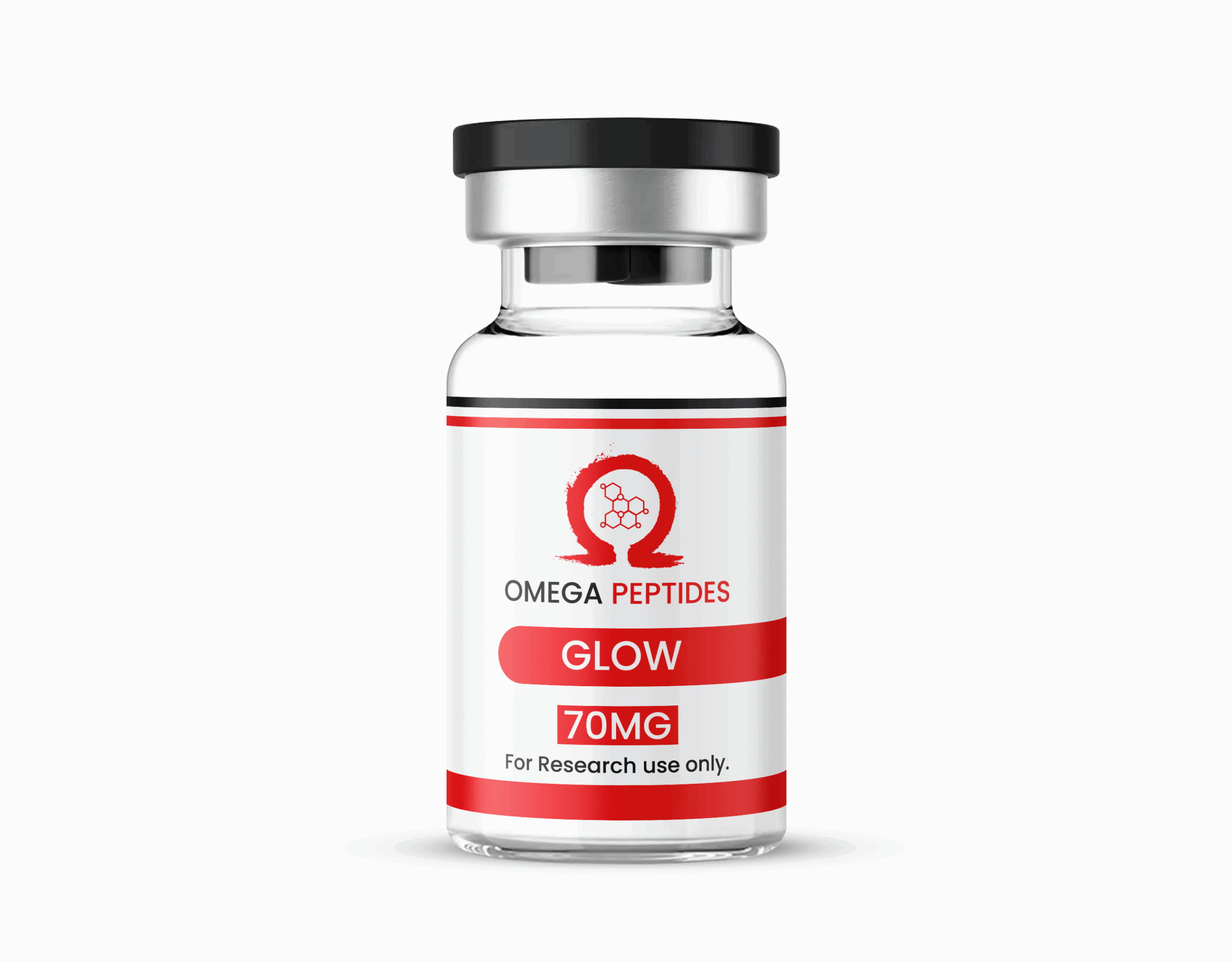
Glow 70mg is a co-lyophilized research blend of three distinct peptides — GHK-Cu, BPC-157, and TB-500 — supplied together in a single vial. The rationale behind the combination is mechanistic convergence rather than redundancy: each component engages tissue-remodeling biology through a different pathway. GHK-Cu is a naturally occurring copper-binding tripeptide isolated from human plasma, studied for its role in collagen and glycosaminoglycan synthesis and its influence on gene expression associated with extracellular matrix turnover. BPC-157, a 15-residue sequence derived from a gastric protective protein, is investigated for angiogenic signaling and its effects on VEGF receptor pathways. TB-500 is a synthetic fragment corresponding to the active region of Thymosin Beta-4, studied for actin sequestration and its role in cell migration and differentiation. Because the three act on complementary axes — matrix synthesis, vascular signaling, and cytoskeletal dynamics — the blend is used in study designs examining combined rather than isolated effects, and as a single-vial control against parallel single-peptide arms. Each component is individually HPLC-verified before blending. This product is for laboratory research and development purposes only and must be handled by qualified professionals. Not for human, therapeutic, or diagnostic use.
GHK-Cu — 50 mg
A copper-binding tripeptide studied for collagen and glycosaminoglycan synthesis and its influence on matrix-related gene expression.
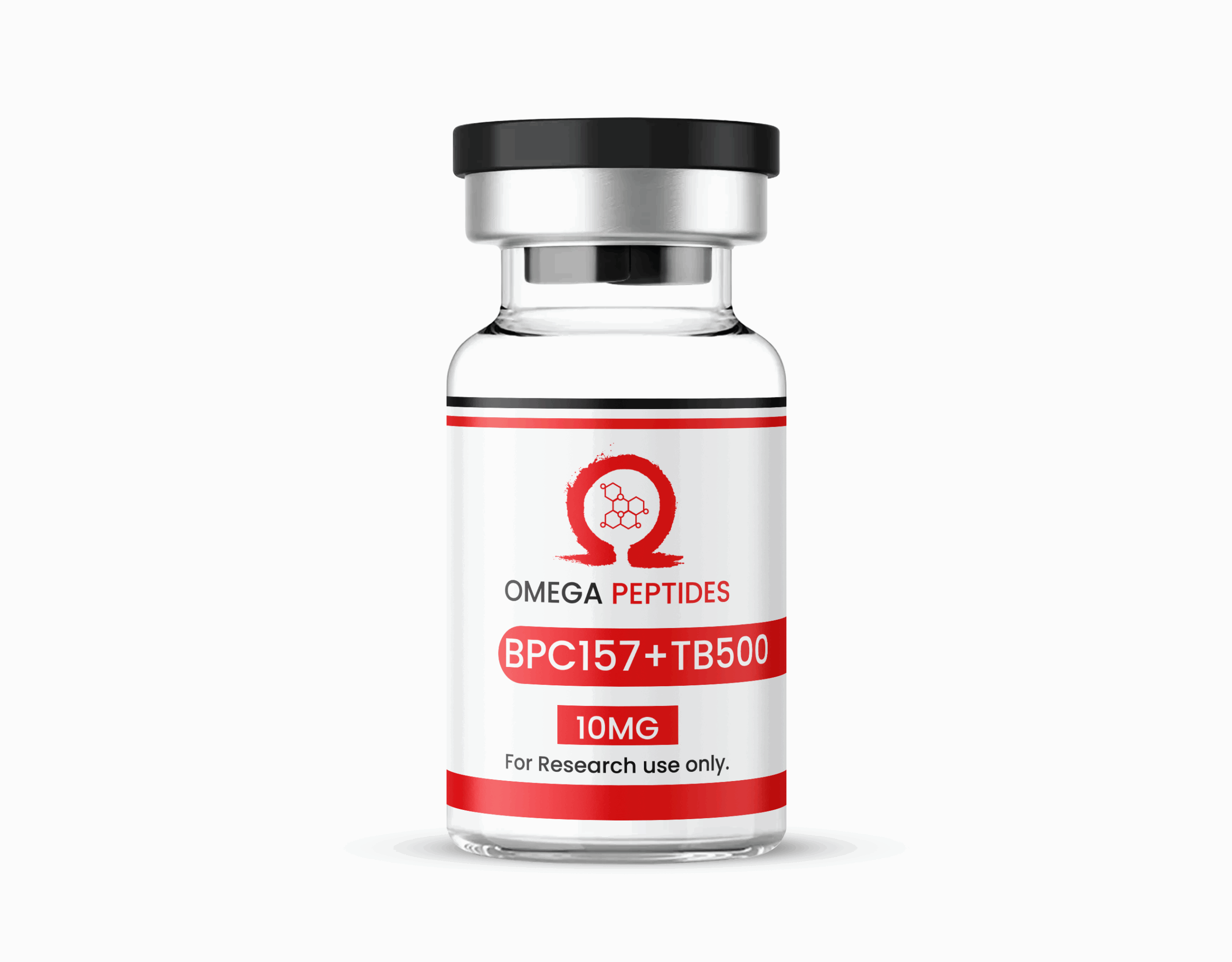
BPC-157 — 10 mg
A 15-residue pentadecapeptide investigated for angiogenic signaling and its effects on VEGF receptor pathways.
TB-500 — 10 mg
A synthetic fragment of the Thymosin Beta-4 active region, studied for actin sequestration and cell migration dynamics.
Mechanistic Convergence
Three distinct pathways — matrix synthesis, vascular signaling, and cytoskeletal dynamics — engaged in a single preparation.
Single-Vial Preparation
Co-lyophilized to a fixed ratio, eliminating the reconstitution variance introduced when combining three separate vials.
≥99% Per Component
Each peptide is individually HPLC-verified before blending, ensuring reproducible ratios across batches.