Compound Information
Technical specifications
Lyophilized powder; keep sealed, dry, and protected from light
Contains a disulfide bridge — avoid reducing agents in the working buffer
Aliquot after reconstitution; avoid repeated freeze–thaw cycles
Lyophilized Powder
-20°C preferred; 2–8°C for short-term handling
Reconstituted
2–8°C
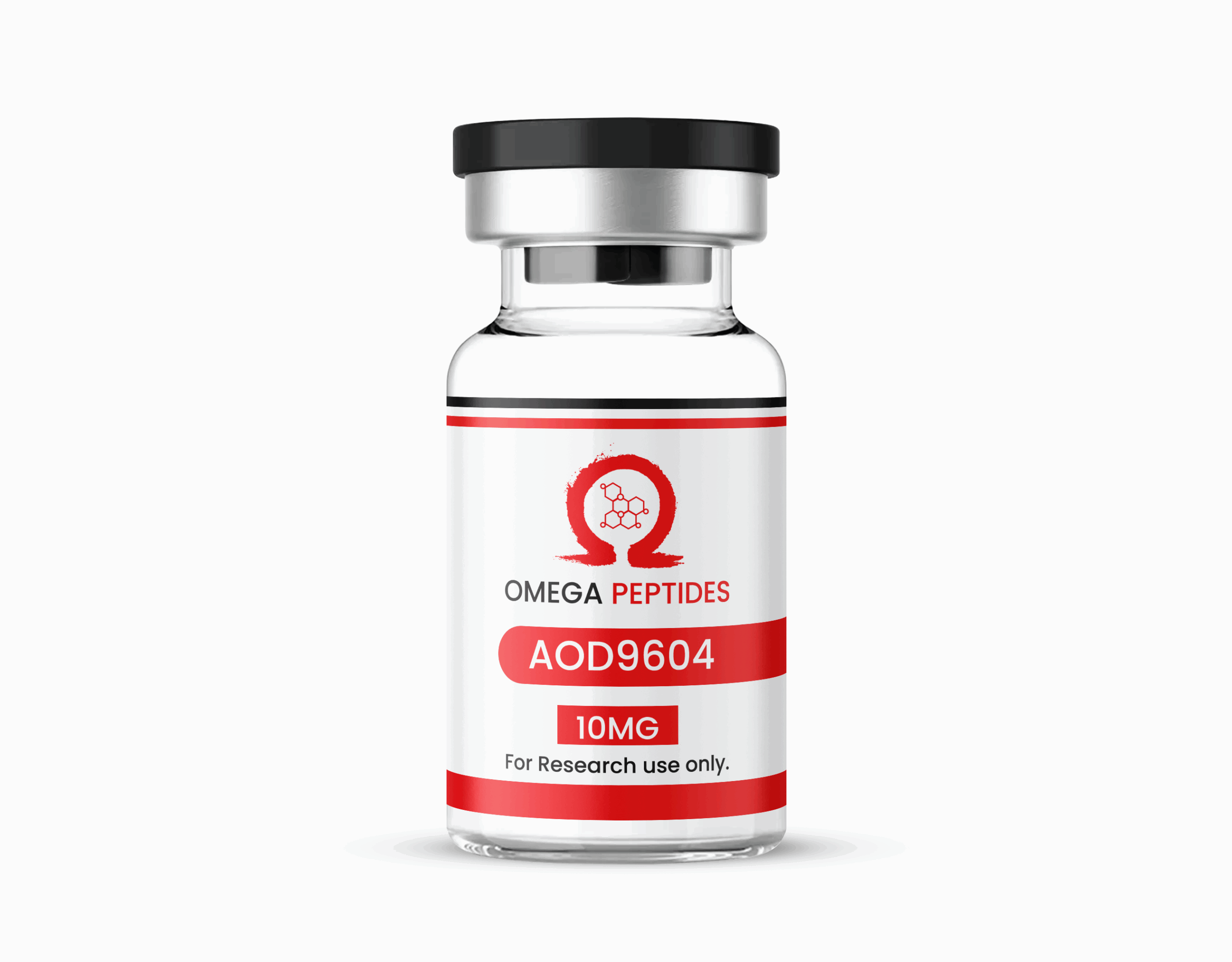
AOD-9604 is a synthetic peptide corresponding to the C-terminal 176–191 region of human growth hormone, with an added N-terminal tyrosine and a stabilizing disulfide bridge. This fragment was identified as the portion of the hGH molecule associated with lipolytic signaling — separable from the regions that drive growth-promoting and glycemic effects. That separation is precisely why it is studied: it allows researchers to probe the fat-metabolism arm of GH signaling without the confounds of IGF-1 induction or insulin resistance that accompany the full-length hormone. Research centers on lipolysis, fatty acid oxidation, and adipocyte signaling in preclinical models. Supplied as a high-purity lyophilized powder for reproducible in-vitro and approved in-vivo work. This product is for laboratory research and development purposes only and must be handled by qualified professionals. Not for human, therapeutic, or diagnostic use.
Isolated Lipolytic Domain
Corresponds to the region of hGH associated with fat-metabolism signaling, separated from its growth-promoting domains.
No IGF-1 Induction
Lacks the receptor engagement that drives IGF-1 output, removing a major confound present in full-length hGH studies.
Adipocyte Signaling
Investigated for its effects on lipolysis and fatty acid oxidation in cultured adipocyte and adipose tissue models.
No Glycemic Confound
Unlike full-length hGH, it does not carry the insulin-resistance signal, allowing cleaner metabolic study designs.
Disulfide-Stabilized
An internal Cys7–Cys14 bridge constrains the peptide’s conformation, supporting consistent behavior across replicates.
≥98% HPLC Purity
Every batch is HPLC-verified and supplied lyophilized, ensuring reproducible results across long study timelines.